ADVENTURE OF THE MONTH: Following in the Footsteps of Olympians at Ed Z’berg Sugar Pine Point State Park
This is an article from our partner, California State Parks.
Klas Lestander of Sweden only had the 15th-best running time of the 30 participants in the first Olympic biathlon, the grueling combination of cross-country skiing and rifle shooting that made its debut at the 1960 Winter Olympics. However, a few miles west of Lake Tahoe, Lestander became the first athlete to hit all 20 targets in an international biathlon championship, a feat that won him the Olympic gold medal in his discipline. Only pine trees witnessed his historic score, though, because live spectators were barred from attending an event that involved firearms.
Today, winter sports enthusiasts who can’t make it to the 2026 Winter Olympics, which are about to kick off in the Italian Alps, can find traces of the inaugural biathlon competition at a California state park. The 1960 Winter Olympics historic event put Lake Tahoe into the international spotlight and changed the trajectory of the area that would become Ed Z’berg Sugar Pine Point State Park.

Clockwise from left: The 1960 Winter Olympics featured the first mechanically groomed cross-country skiing racecourses. The 4×10 km cross-country skiing relay race in what is today park area. The Olympics welcome panel at the park entrance today.
Sugar Pine Point State Park is the largest California state park in the Tahoe area, with two miles of shoreline and more than 12 miles of trails extending on both sides of General Creek deep into the U.S. Forest Service’s Desolation Wilderness. The park’s centerpiece, the stately Hellman-Ehrman Mansion, overlooks the western shore of Lake Tahoe, facing snowcapped mountains that reflect in the famously blue waters of the Sierra Nevada jewel. The Ehrman family also owned the land around General Creek, which became the cross-country and biathlon venues of the 1960 Winter Olympics at Squaw Valley (now renamed Palisades Tahoe).
The 1960 Winter Games were the first Olympics to be televised in the U.S.; the broadcast rights had cost CBS a mere $50,000. The opening ceremony was produced by Walt Disney, setting the bar for the elaborate pageantry that have become part of every Olympics since. The cross-country events introduced new technologies like electric timing and mechanically groomed racecourses by what was then a state-of-the-art 1958 Tucker Sno-Cat.
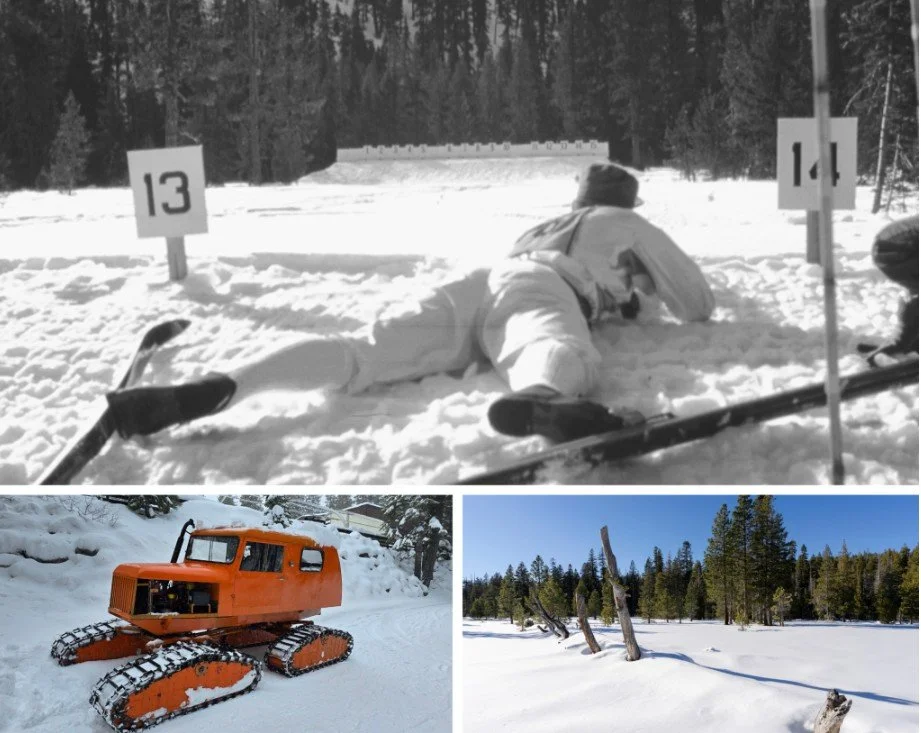
Clockwise from top: The first Olympic biathlon competition took place in today’s park area in 1960. The former biathlon shooting range site in the park today. The 1958 Tucker Sno-Cat used for the Olympics is still a part of the park’s museum collection.
Before the 1960 Games delivered televised images of the California Sierra into homes worldwide, “not many people understood the awe of Lake Tahoe,” says Kaytlen Jackson, public information officer for the Sierra District. The Switzerland-based International Olympic Committee had initially been hesitant to hold a Winter Olympics in California, a state that throughout the 20th century had been shaped by images of beaches, oranges and palm trees.
The 1960 Olympics were harbingers of a new era at Lake Tahoe, where in the 1920s and 30s, wealthy and glamourous families like the Hellmans and Ehrmans entertained guests in their summer mansions and competed for trophies in expensive boat races. Five years after the Olympics, in 1965, the 2,000 acres of private property became a state park named after the California state assemblymember, Edwin Z’berg, who made the preservation of Lake Tahoe his lifelong effort.
“The Olympics served as a catalyst that propelled us into the stewardship of the land,“ says Jackson.
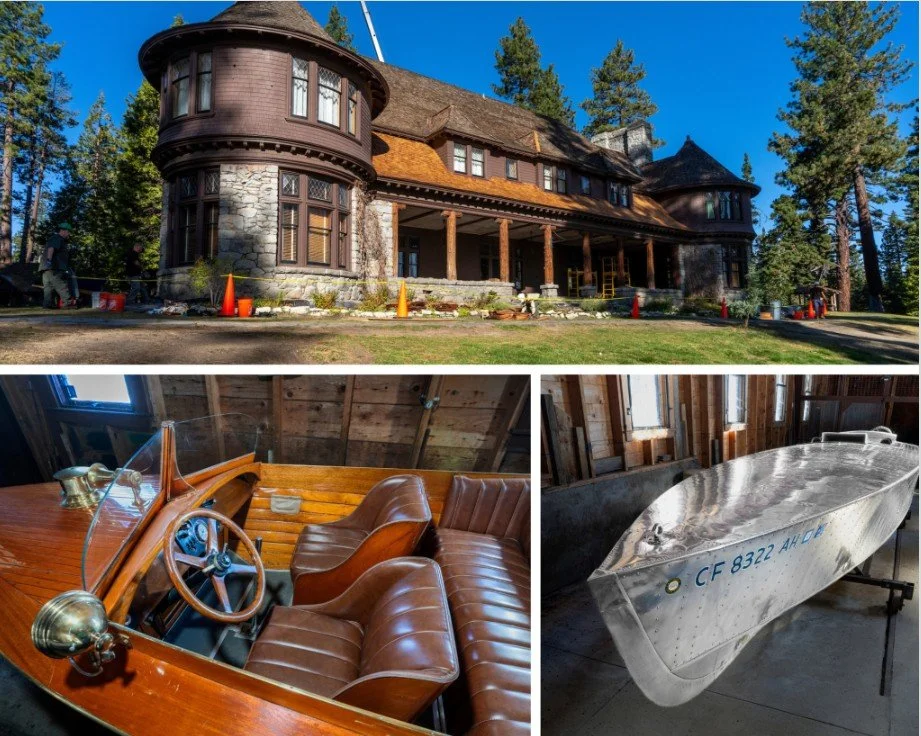
Top: The Hellman-Ehrman Mansion (Pine Lodge) was completed in 1903 by the architect Walter Danforth Bliss in California Craftsman Style, using largely native materials. Bottom right: The Mercury, built in from heat-treated polished aluminum (duraluminum) in 1926. It was brought from the East Coast to Lake Tahoe for races, reaching over 55 miles per hour. Bottom left: The cockpit of the Cherokee, the luxury pleasure boat custom-designed for Esther (Hellman) Lazar, the sister of Hellman-estate heiress Florence (Hellman) Ehrman.
The park’s stewardship efforts include the Edwin L. Z’berg Natural Preserve with some of the best-preserved stands of sugar pines. Since summer 2025, State Parks has returned the names of features and facilities within the park that were attributed to the historic figure “General” Phipps” to its traditional Washoe name, dukMéʔem wáta — “wave creek.”
While the connection of the land to the Washoe people, who still live on both the California and Nevada sides of the lake, has been unbroken for thousands of years, the temporary structures of the 1960 Winter Olympics were removed shortly after the Games ended. It took almost 40 years for Sugar Pine Point’s Olympic legacy to become visible again, when researcher and author David Antonucci reconstructed the locations of the 20km cross-country trail and the biathlon shooting range in the park.
“The Olympics served as a catalyst that propelled us into the stewardship of the land“ – Kaytlen Jackson, Sierra District Public Information Officer.
Today, the 1960 Olympics “plays a big role in the park’s winter interpretive program,” says Jackson. Administrative Officer Liz McMillan and other staff regularly groom the historic trails in a modernized version of the Sno-Cat. And throughout the winter, Senior Park Aide for Interpretation Camden Dahms leads free guided snowshoe hikes to the historic Olympic sites. There, on a meadow ringed by dense conifer forest, visitors might just find themselves in the exact spot where 66 years ago Klas Lestander achieved his historic 20/20 shooting score. Even without winning any medals, it’s possible to feel like “Olympians for a day” in one of California’s finest state parks.
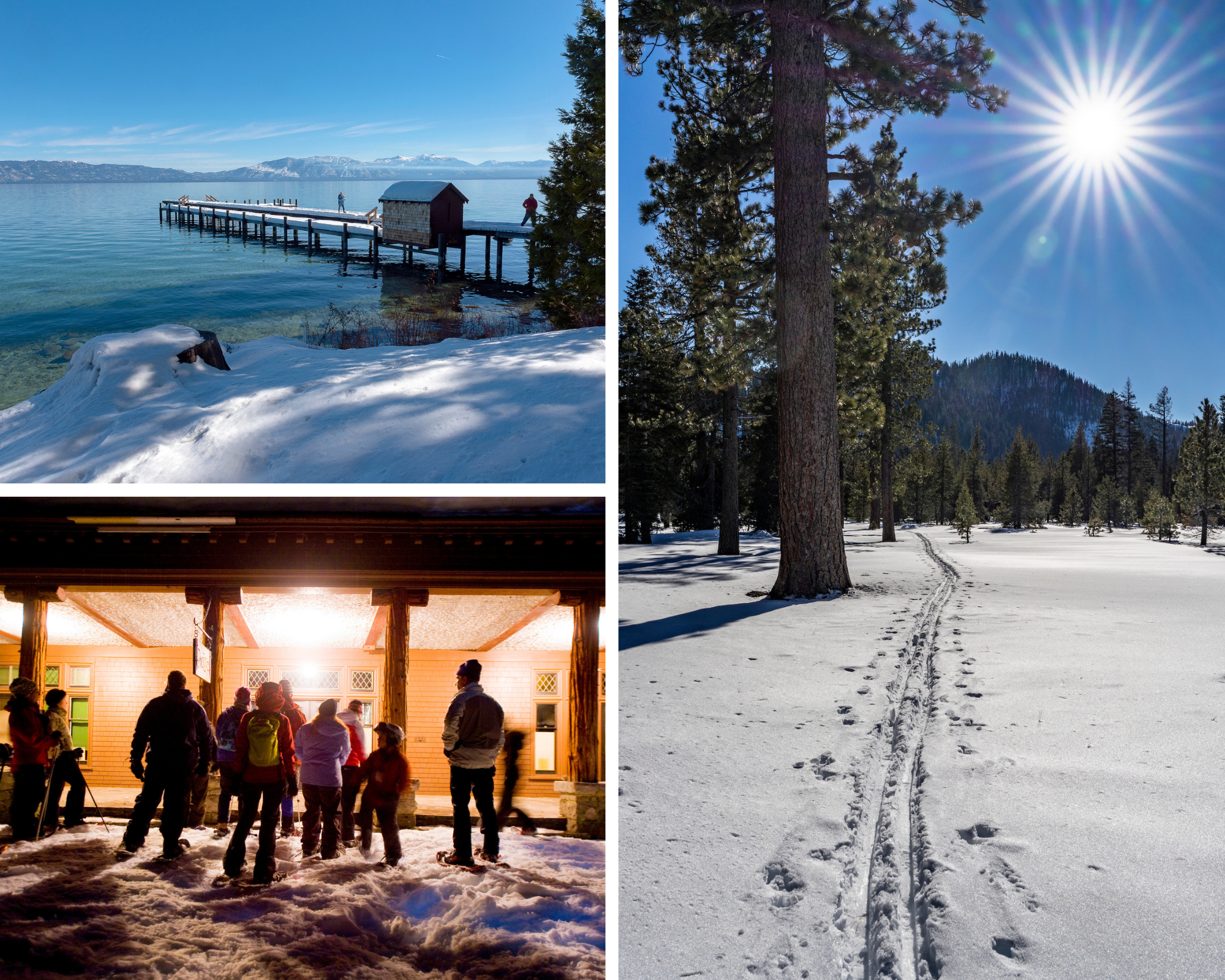
Ed Z’berg Sugar Pine Point State Park offers year-round access to Lake Tahoe, cross-country and snowshoe hiking through beautiful nature, and traces of Olympic history.