
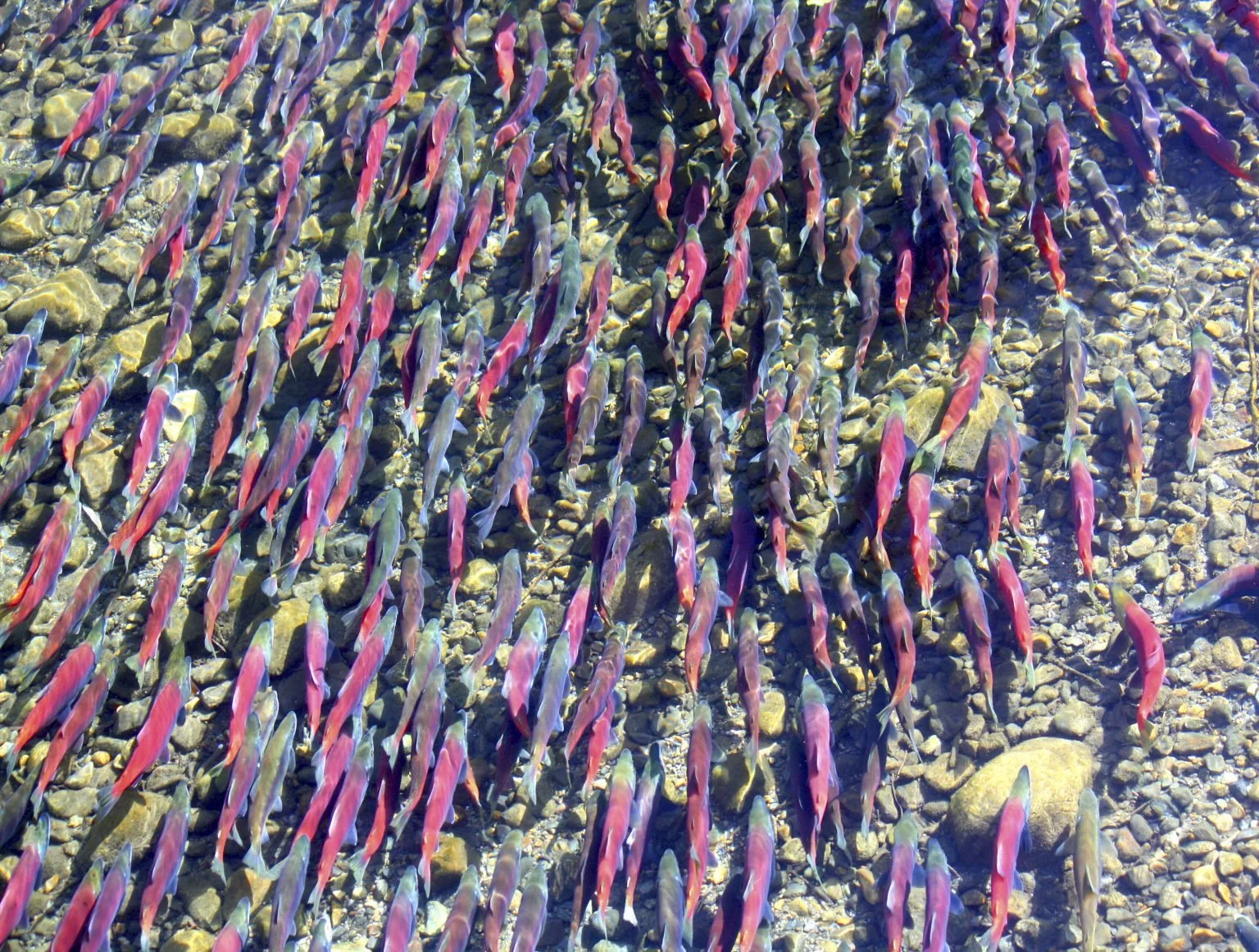
If you've visited Taylor Creek recently, you may have noticed something unusual: fewer kokanee salmon than expected. While autumn marks the start of one of Lake Tahoe's most beloved wildlife spectacles, this year's spawning season got off to a slow start due to unusually low water levels in the creek and its tributaries.
Each fall, kokanee salmon leave the deep waters of Lake Tahoe and swim upstream into creeks such as Taylor Creek to spawn. The journey is triggered by two important environmental cues: colder water temperatures and increased stream flows. While temperatures this year were suitable for spawning, the lack of water proved to be a significant challenge. Following a winter with limited snowpack and a dry fall, many of the streams feeding the lake were running at some of their lowest autumn levels, creating less-than-ideal conditions for salmon trying to reach spawning habitat.
Fortunately, the recent snowstorm may be exactly what the salmon need.
According to biologists with the Lake Tahoe Basin Management Unit, precipitation events can dramatically improve spawning conditions by increasing stream flows and helping fish access upstream areas that may have been difficult or impossible to reach during low-water periods. In fact, successful kokanee runs are often associated with autumn storms that bring a rush of fresh, cold water into tributaries.
A notable example occurred in 2021, when a major late-October atmospheric river boosted flows in Taylor Creek and helped create exceptional spawning conditions. Those higher water levels allowed salmon to move farther upstream and access more spawning habitat.
Some visitors may wonder whether snow and colder temperatures could actually be harmful to the fish. The opposite is generally true. Kokanee are adapted to spawn in cold water, and cooling temperatures are one of the natural signals that tell them it is time to begin their migration. The primary concern this year has not been cold temperatures, but rather the availability of water.
The annual salmon run is about more than just the fish themselves. After spawning, kokanee salmon die, returning valuable nutrients to the ecosystem and providing an important food source for wildlife preparing for winter. Bears, bald eagles, river otters, coyotes, raccoons, and many other animals benefit from a healthy salmon run, making the spawn a critical seasonal event throughout the basin.
While it's still too early to know exactly how many salmon will ultimately make the journey this season, the recent storm is an encouraging sign. With colder temperatures settling in and stream flows beginning to rise, conditions may improve in the weeks ahead. Visitors to Taylor Creek should keep an eye on the water. Nature may be getting ready to put on a stronger show than it seemed just a few weeks ago.
Source: tahoedaily...ribune.com, recordcourier.com